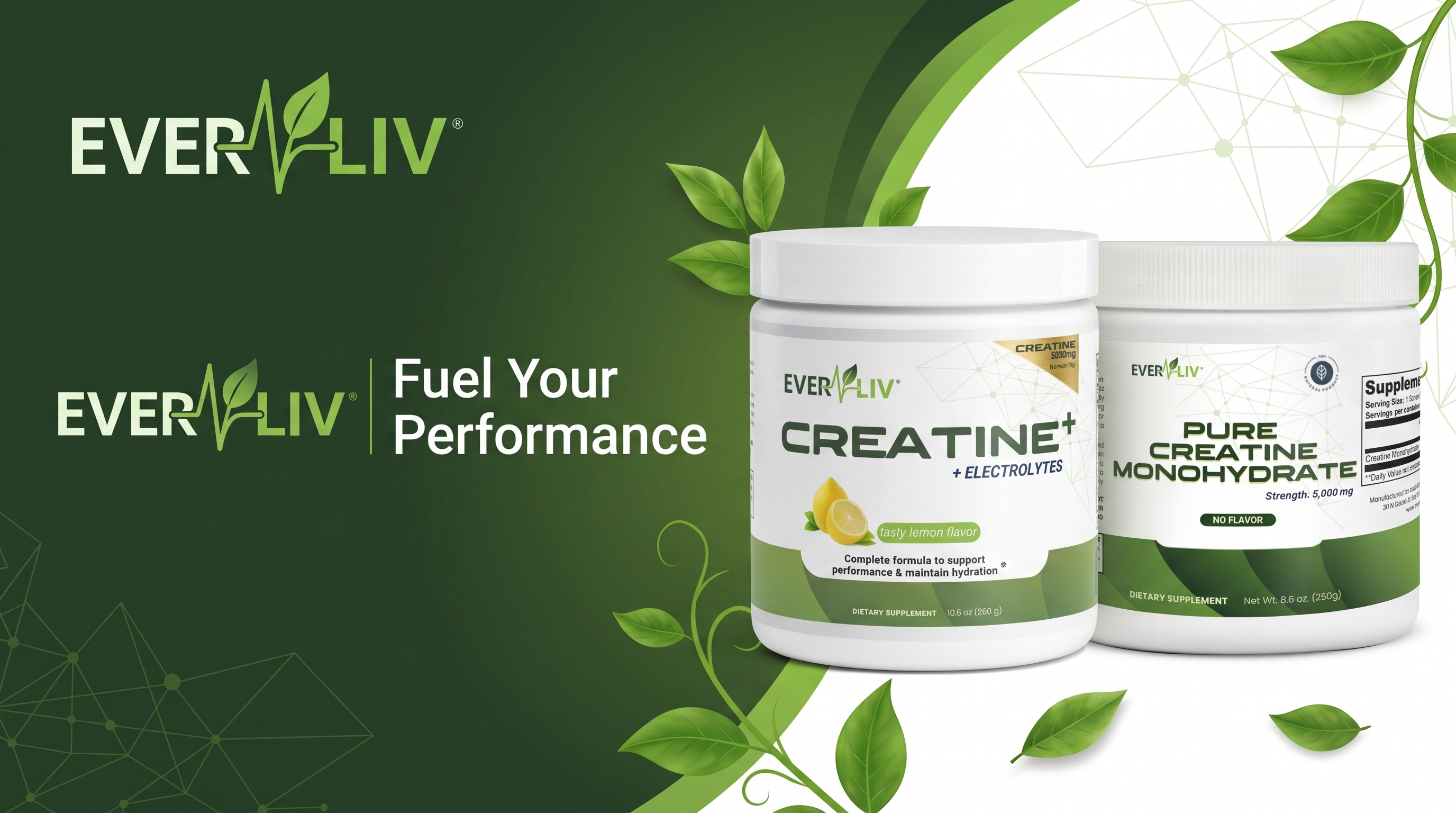
Creatine has a branding problem. The science is catching up.
If you only know creatine as the thing bodybuilders scoop into a shaker bottle, you are not alone. That is still the most common version of the story. But it is also incomplete.
The real conversation around creatine for mental and physical health is bigger than gym culture. It is about cellular energy, mental output, recovery, and whether a supplement actually earns a place in a busy person’s day.
And that last part matters more than most supplement marketing wants to admit. A product can have real science behind it and still fail in the real world if it is annoying, easy to forget, or too complicated to keep taking. We see that constantly in forum threads and late-night Reddit posts: people are not just asking whether creatine works. They are asking if it works for them — someone with meetings, travel, poor sleep, a packed calendar, and zero interest in becoming a full-time supplement manager.
That is the story worth telling.
What creatine is actually doing in the body
Creatine is not some mysterious performance powder. It is a naturally occurring compound your body uses to help recycle energy quickly, especially when demand spikes. Muscles use it. The brain uses it too. That is why creatine shows up in conversations about physical performance and cognitive support.
In simple terms, creatine helps keep energy available when your system is working hard. That does not mean it turns you into a superhero. It means it may support the kind of short-burst, high-demand output that shows up in training sessions, long workdays, and mentally expensive days when you are trying to think clearly on limited sleep.
This is where the supplement gets interesting. Most people still think in either/or terms: creatine for the gym, or no reason to take it. But the research conversation has moved beyond that. Creatine is now being studied as part of the broader energy picture for both brain and body.
Why the brain is part of the story
The brain is expensive. Not metaphorically — biologically. It burns a lot of energy to keep you focused, responsive, and functioning under pressure. When the demand is high, the brain’s energy systems matter even more.
That is why creatine for brain health keeps appearing in research discussions. A number of studies and reviews suggest creatine may support cognitive performance in certain situations, including tasks that rely on short-term memory or reasoning. The signal is not identical for every person, and it is not a miracle story. But it is real enough that serious researchers keep paying attention.
There is also a practical angle people relate to immediately: sleep loss, stress, travel, and heavy mental workload. Those are the moments when your brain feels like it is trying to run too many tabs at once. Creatine is being studied in exactly those kinds of high-demand contexts because they are where energy support tends to matter most.
The interesting thing is not that creatine only helps athletes. The interesting thing is that the brain, like the muscles, cares about energy availability when the day gets demanding.
That is a very different message from the old gym-only pitch.
What people keep asking online — and why those questions are fair
Spend five minutes in a Reddit thread or a forum comment section and the same questions keep coming up:
- Do I need a loading phase?
- Will I notice anything if I do not lift like a bodybuilder?
- Is this just a gym supplement, or can it help with focus too?
- Will it make me feel bloated or weird?
- How long do I have to take it before it feels worth it?
Those are sensible questions. They are the questions real humans ask when they are tired of buying expensive supplements that live in a drawer. And they point to the biggest gap in creatine content: most articles explain the science, but they do not explain the habit.
That is why so many people get stuck in what we call the supplement loop of good intentions and bad follow-through. You buy the thing. You take it for a while. You forget it on a trip. It moves into the back of a cabinet. Three weeks later you are wondering whether it ever did anything.
The issue is not always the ingredient. Sometimes it is the routine.
Loading, maintenance, and the consistency trap
There is a lot of chatter online about creatine loading phases versus slower maintenance approaches. The internet often makes this sound more dramatic than it needs to be. The more useful takeaway is simpler: consistency matters more than perfection.
If your routine is chaotic, the best plan is usually the one you can repeat. Some people like to load. Some skip that and stick with a steady daily approach. Either way, the daily habit is what turns creatine from an idea into a real part of your performance stack.
Timing is similar. A lot of people obsess over whether creatine has to be taken at a specific hour to matter. In real life, the better question is: when will you actually remember it?
For busy professionals, remote workers, frequent travelers, and anyone whose days are broken into meetings, commutes, flights, and deadlines, the answer is usually: tie it to something you already do.
- Keep it next to your coffee setup.
- Store it in your work bag.
- Pair it with your morning routine.
- Use the same cue every day so it stops being a decision.
That is where the supplement conversation gets more honest. The biggest real-world benefit may come from the product you can actually keep using.
Who may care most about creatine for mental and physical health
Not a bodybuilder? You may still care about creatine more than you think.
There is a reason this topic is expanding beyond the gym. Creatine may be useful to people who care about both mental performance and physical output, especially when life is not running on perfect sleep and clean lab conditions.
That includes:
- Busy professionals who need sustained output without the afternoon slump.
- High-stress remote workers who spend the day switching between deep work and distractions.
- Frequent travelers who deal with interrupted routines, early flights, and bad hotel sleep.
- Fitness-focused people who care about training output and recovery.
- Women and men 25-54 who want a smarter daily supplement routine, not a bigger cabinet.
- Older adults who are interested in maintaining everyday performance capacity over time.
The common thread is not identity. It is demand. Creatine makes sense to people whose bodies and brains are both being asked to do a lot.
The part nobody talks about: bio-optimization is mostly about behavior
We talk a lot about bio-optimization now, but the truth is that the best stack is not the most complicated one. It is the one that fits into a real life.
This is where EverLiv’s perspective matters. Creatine may be one part of your broader wellness plan, but the rest of your stack should not make your day harder. That is why we think in terms of a 24-hour loop: energy when you need to move, hydration when you are drained, and nighttime support when you need to wind down.
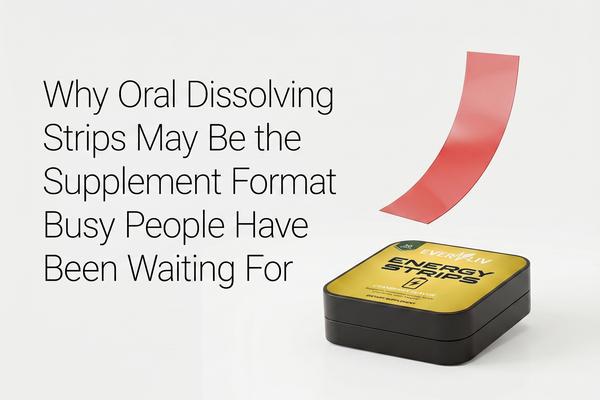
For the parts of the routine that need near-instant absorption, oral strips are a different kind of format altogether. Through transmucosal delivery, they are designed to bypass the usual pill-and-water hassle. No water. No binders. No fillers. No gummy sugar. Just a wallet-size format that is easy to keep in a desk drawer, backpack, carry-on, or car console.
That matters because routine design is not a side issue. It is the difference between a supplement that looks good in a cart and a system you actually use.
The supplement you remember is usually the one you can take without rearranging your morning.
That is the whole point of convenience done well: not gimmicky, not flashy, just usable.
How to think about the rest of your stack
If creatine is your steady daily base, the other pieces of your routine should be just as intentional. Look for products that are science-backed, third-party tested, and transparent about what is inside the box. A COA should not feel optional. Full transparency should not be a luxury feature.
For EverLiv, that standard shows up in the details that matter to people who read labels:
- High-purity formulas
- Third-party tested quality checks
- Certified organic ingredients where applicable
- No fillers and no binders
- Zero waste formatting that does not require a shaker or extra packaging
That kind of clarity is what separates a modern wellness tool from a shelf full of vague promises.
And for people who are already sensitive to supplement fatigue, it helps to think less about buying another product and more about building a cleaner system. One piece for clean energy. One for hydration. One for evening calm. One daily loop that does not fight your schedule.
What to expect — and what not to expect
Creatine is useful, but it is not a shortcut. It is not a guarantee. It is not a replacement for sleep, food, movement, or good judgment. It is one tool in the larger picture of sustainable energy, vitality, clarity, and performance.
So if you are trying creatine for the first time, keep your expectations grounded. Pay attention to how your routine feels over time. Notice whether it is easier to stay consistent. Notice whether your training, focus, or daily stamina feels more supported. And if you do not love the format, that matters too. A supplement you dislike is a supplement you will eventually stop taking.
That is one reason we care so much about format at EverLiv. Our oral strips are built for the people who want convenience without compromise: no pills, no water, no sugary gummies, and no extra friction. They are designed to fit into a real schedule, whether you are aiming for clean energy in the morning, calm focus in the afternoon, hydration on the move, or relaxation at night.
Creatine and EverLiv are not the same thing, and they do not need to be. Creatine can be the steady daily compound you keep in rotation. Oral strips can be the fast, portable support that makes the rest of your routine easier to keep.
Bottom line: choose the version of the routine you will keep
If you care about creatine for mental and physical health, the smartest move is not to chase the loudest claim. It is to choose a routine that is simple enough to survive real life.
Ask yourself three questions:
- Does this fit into my day without making me think too hard?
- Can I keep it going when I travel, work late, or miss a meal?
- Do I trust the product enough to make it part of my long-term stack?
If the answer is yes, you are already ahead of most supplement buyers.
And if you want to make the rest of your wellness routine just as easy to repeat, start with one clean habit and one format you will not forget. Build around it. Keep it simple. That is what bio-optimization looks like when it is actually lived by human beings, not just talked about online.
Start by auditing your stack this week: keep your creatine where you will see it, remove one supplement you never use, and look for the support you do take in a format that is wallet-size, science-backed, and easy to repeat. That is how a 24-hour loop starts to feel less like a project and more like something you can actually maintain.